← Art & CalligraphyRelated art & calligraphy
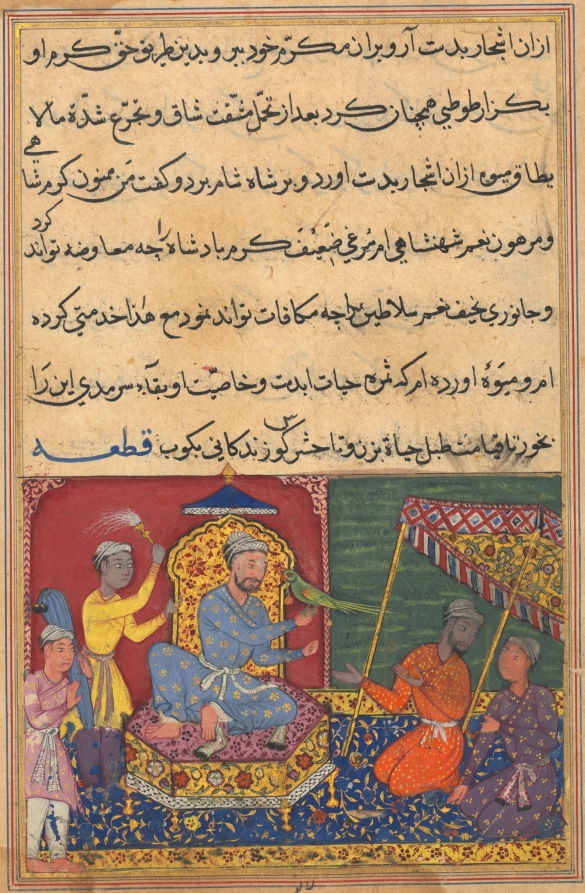
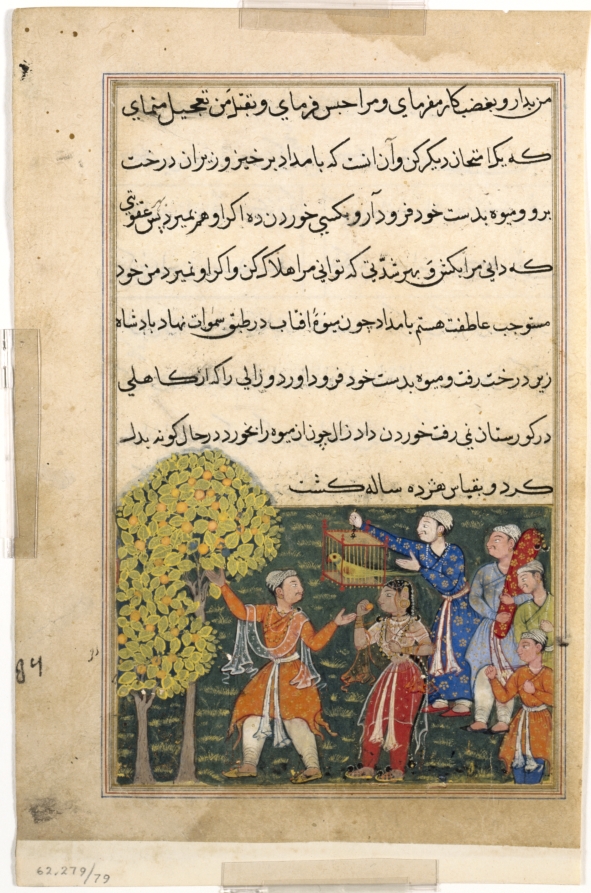
The king dreams of a lady, the personification of wealth, departing from him on account of his purchasing a bowl and a staff from a yogi, from a Tuti-nama (Tales of a Parrot): Thirty-sixth Night The parrot brings a fruit from the Tree of Life to the king of Syria, from a Tuti-nama (Tales of a Parrot): Ninth Night
 The king plucks fruit from the Tree of Life with his own hands and feeds it to a lady, from a Tuti-nama (Tales of a Parrot): Ninth Night
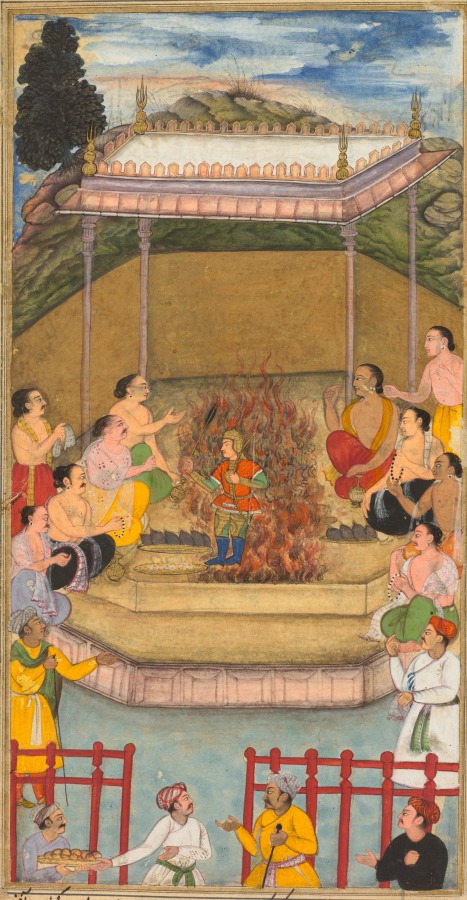
 Yaja and Upayaja perform a sacrifice for the emergence of Dhrishtadyumna from the fire, from Adi-parva (volume one) of the Razm-nama (Book of Wars) adapted and translated into Persian by Mir Ghiyath al-Din Ali Qazvini, known as Naqib Khan (Persian, d. 1614) from the Sanskrit Mahabharata
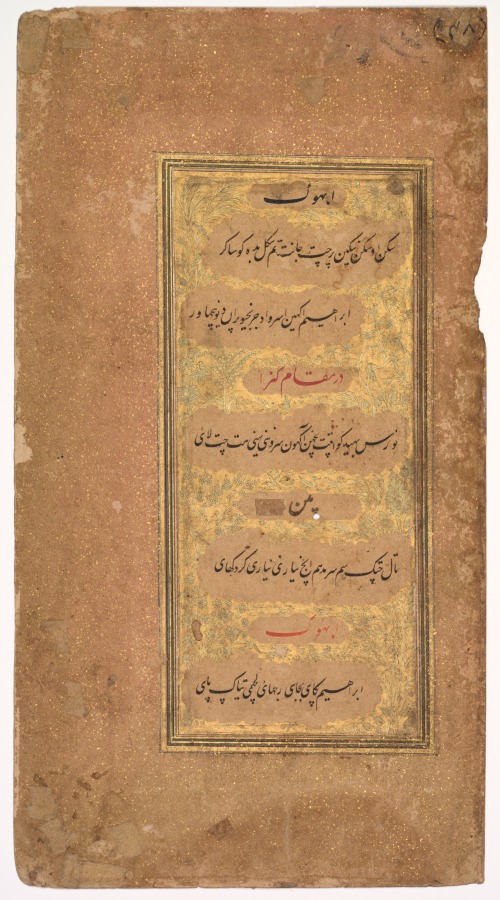
 Dohras (Songs) from the Kitab-i Nauras of Sultan Ibrahim Adil Shah II of Bijapur (1570 to 1627); recto: From Dohras 36 and 40; verso: From Dohras 40 and 42
 Leaf from the Late Shah Jahan Album: Harem Night-Bathing Scene (recto); Calligraphy Framed by an Ornamental Border of Flowers and Birds (verso)
 Persian calligraphy framed by an ornamental border of flowers, birds, and deer, from the Late Shah Jahan Album
 The origin of music from a fabulous bird of India which had seven holes in its beak, from a Tuti-nama (Tales of a Parrot): Fourteenth Night

