← Art & CalligraphyRelated art & calligraphy
Yaja and Upayaja perform a sacrifice for the emergence of Dhrishtadyumna from the fire, from Adi-parva (volume one) of the Razm-nama (Book of Wars) adapted and translated into Persian by Mir Ghiyath al-Din Ali Qazvini, known as Naqib Khan (Persian, d. 1614) from the Sanskrit Mahabharata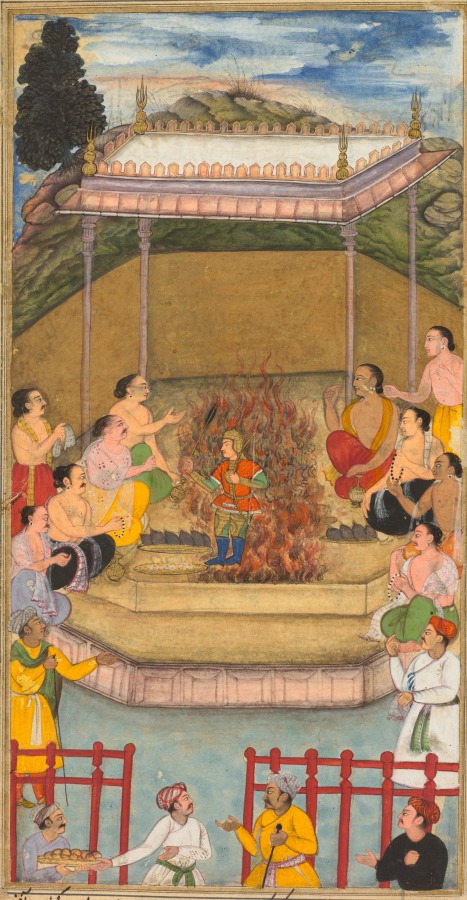 Leaf from a Kalighat album: Jatayu hinders Ravana’s chariot trying to prevent Sita’s abduction (recto); Battle Scene at Kurukshetra from the Mahabharata War (verso)
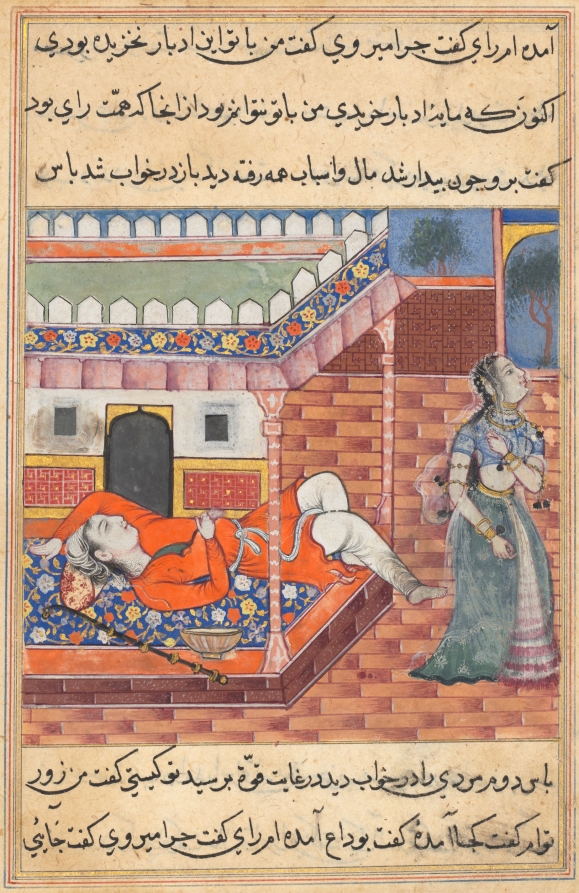
 The king dreams of a lady, the personification of wealth, departing from him on account of his purchasing a bowl and a staff from a yogi, from a Tuti-nama (Tales of a Parrot): Thirty-sixth Night
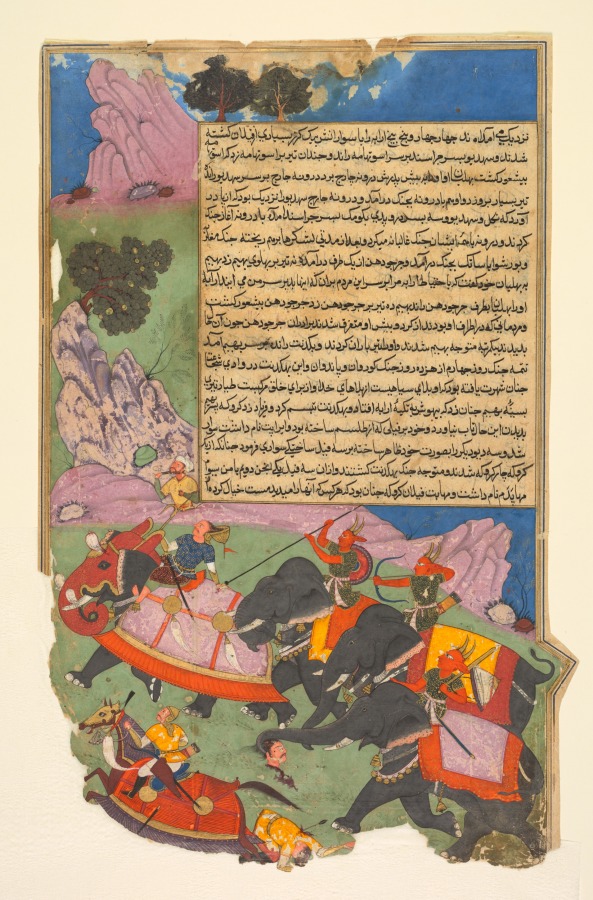
 Ghatotkacha and three demons in his company chase Bhagadatta, from Bhishma-parva (volume six) of a Razm-nama (Book of Wars) adapted from the Sanskrit Mahabharata and translated into Persian by Mir Ghiyath al-Din Ali Qazvini, known as Naqib Khan (Persian, d. 1614)
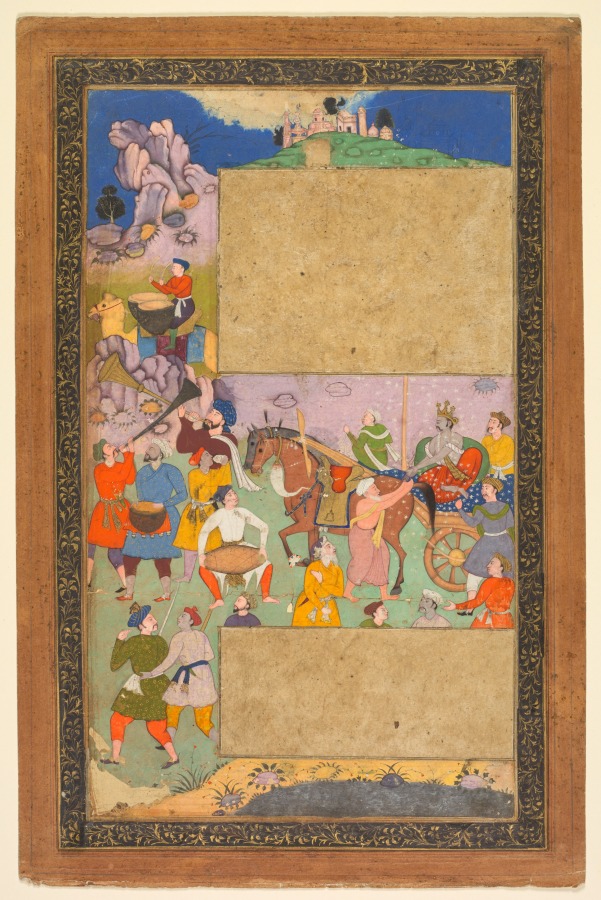
 A charioteer riding through a rocky landscape with an entourage of footmen and musicians, page from a Razm-nama (Book of Wars) adapted from the Sanskrit Mahabharata and translated into Persian by Mir Ghiyath al-Din Ali Qazvini, known as Naqib Khan (Persian, d. 1614)
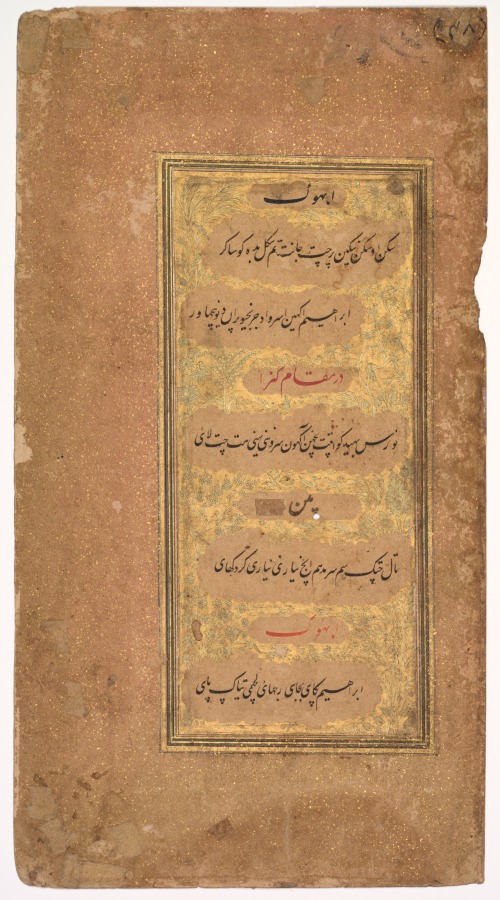
 Dohras (Songs) from the Kitab-i Nauras of Sultan Ibrahim Adil Shah II of Bijapur (1570 to 1627); recto: From Dohras 36 and 40; verso: From Dohras 40 and 42
 Battle Scene at Kurukshetra from the Mahabharata War (verso), from a Kalighat album
 The origin of music from a fabulous bird of India which had seven holes in its beak, from a Tuti-nama (Tales of a Parrot): Fourteenth Night