← Art & CalligraphyRelated art & calligraphy
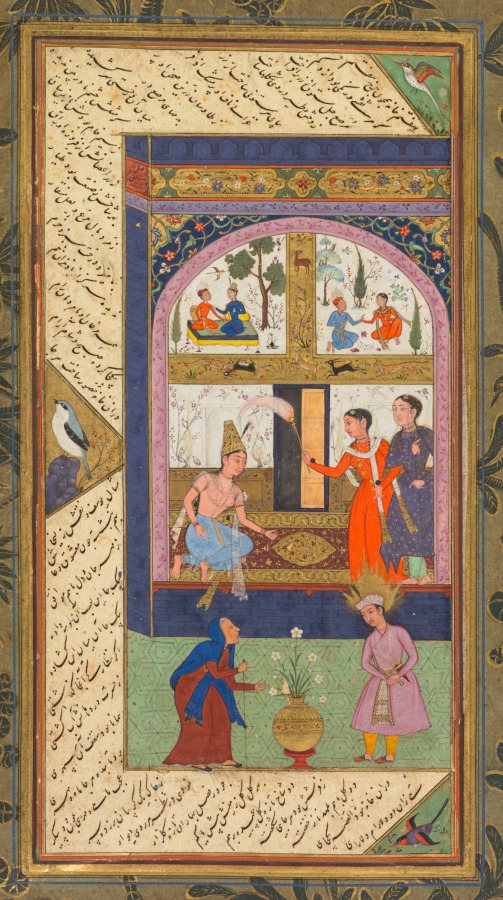
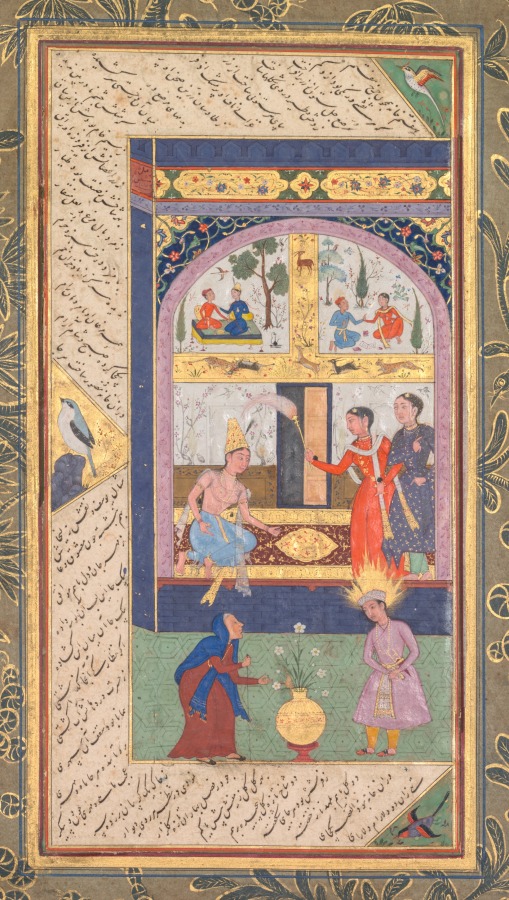
Zulaykha in her palace and as an old woman with Joseph, from a Panj Ganj (Five Treasures) of Abd al-Rahman Jami (Persian, 1414 to 1492); verso from a Panj Ganj of Abd al-Rahman Jami (Persian, 1414 to 1492), with two masnavis: Yusuf va Zulaykha (Joseph and Zulaykha) and Khirad-nama-i Iskandari (Alexander’s Book of Wisdom)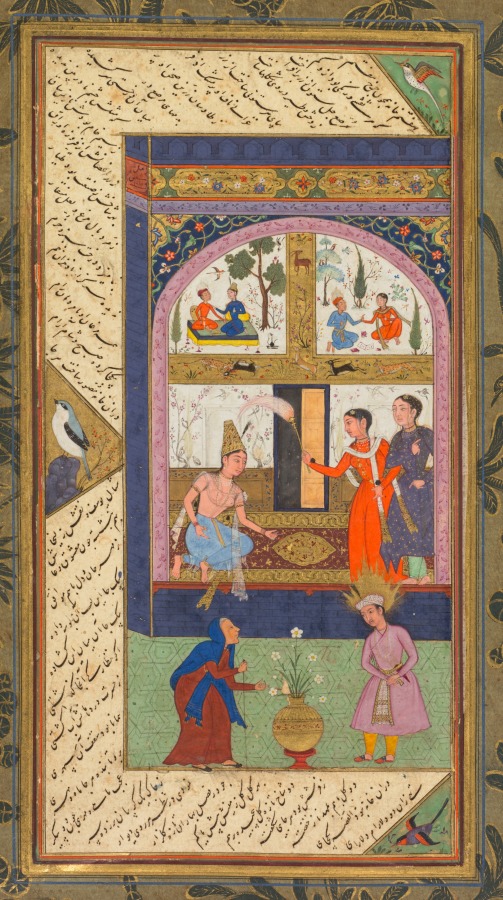 Zulaykha in her palace and as an elderly woman with Joseph (recto), from a Panj Ganj (Five Treasures) of Abd al- Rahman Jami (Persian, 1414 to 1492)
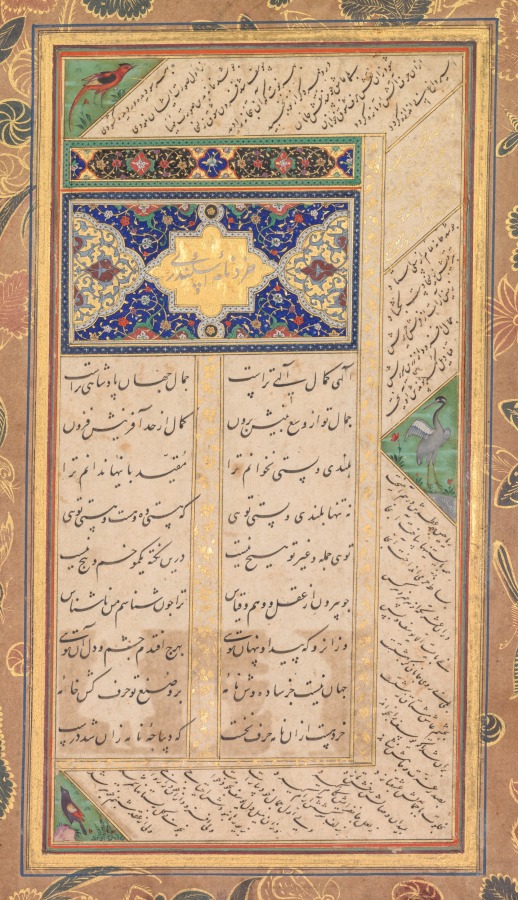
 Illuminated page (verso), from a Panj Ganj (Five Treasures) of Abd al- Rahman Jami (Persian, 1414 to 1492) with two Persian masnavis: Yusuf va Zulaykha (Joseph and Zulaykha) and Khirad-nama-i Iskandari (Alexander’s Book of Wisdom)
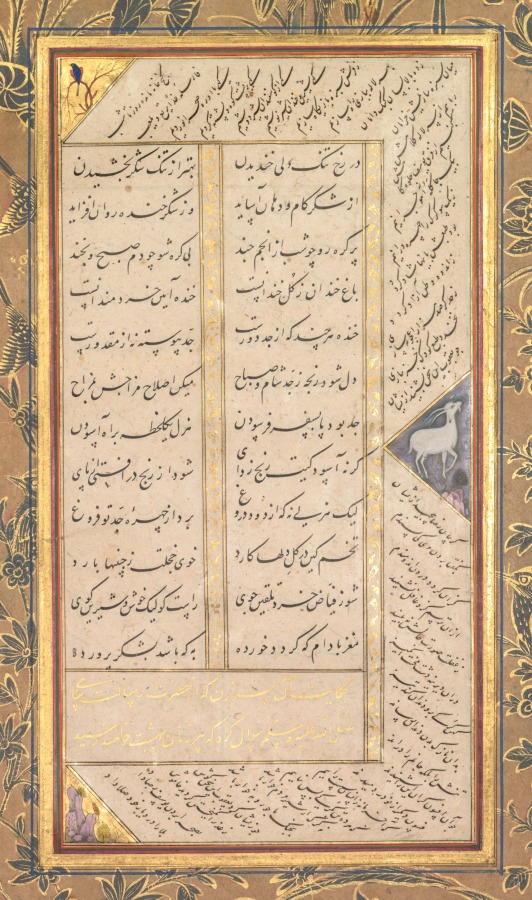
 Page from the Panj Ganj (Five Treasures) of Abd al-Rahman Jami (Persian, 1414 to 1492), with two Persian masnavis (narrative poems): Yusuf va Zulaykha (Joseph and Zulaykha) and Subhat al-abrar (Rosary of the Righteous)
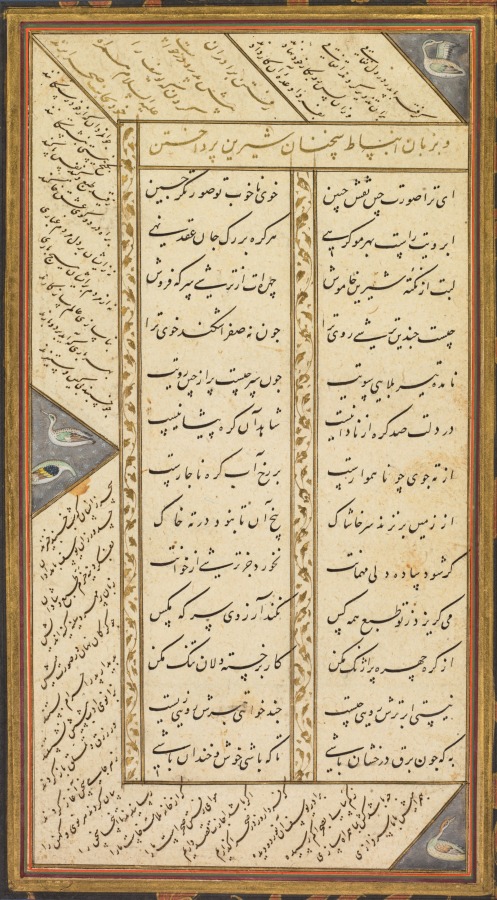 Folio B: Folio from the "Five Treasures" (Panj Ganj) of Jami (recto)
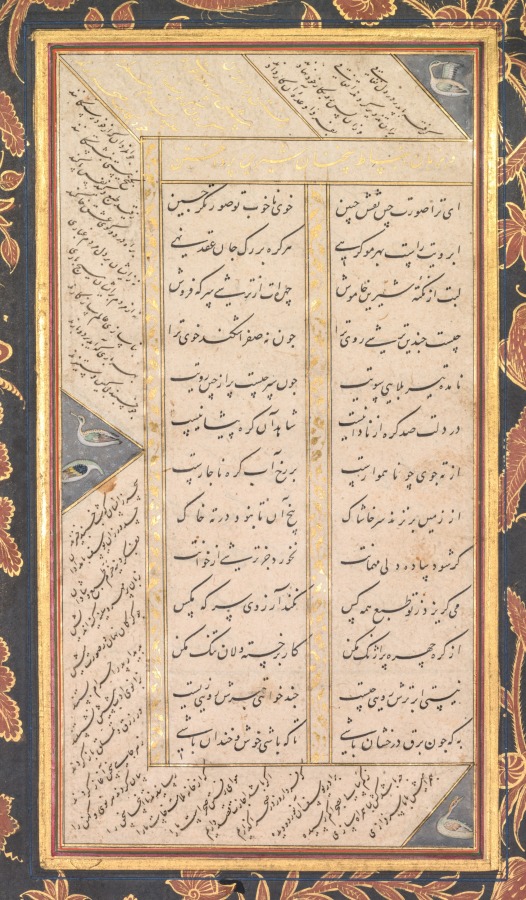 Page from a Panj Ganj (Five Treasures) of Abd al-Rahman Jami (Persian, 1414 to 1492), with two Persian
masnavis: Yusuf va Zulaykha (Joseph and Zulaykha) and Subhat al-abrar (Rosary of the Righteous) (verso)
 The king dreams of a lady, the personification of wealth, departing from him on account of his purchasing a bowl and a staff from a yogi, from a Tuti-nama (Tales of a Parrot): Thirty-sixth Night
 Madhava plays his vina before five women drawing water from a well, folio 3 from a Madhavanala-Kamakandala