← Art & CalligraphyRelated art & calligraphy
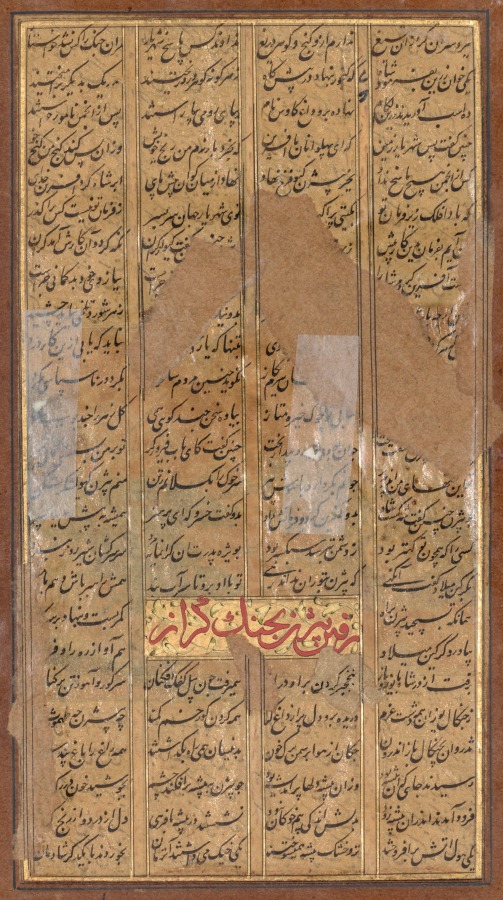
Bijan killing the wild boars of Irman, from a Shah-nama (Book of Kings) of Firdausi (Persian, about 934 to 1020)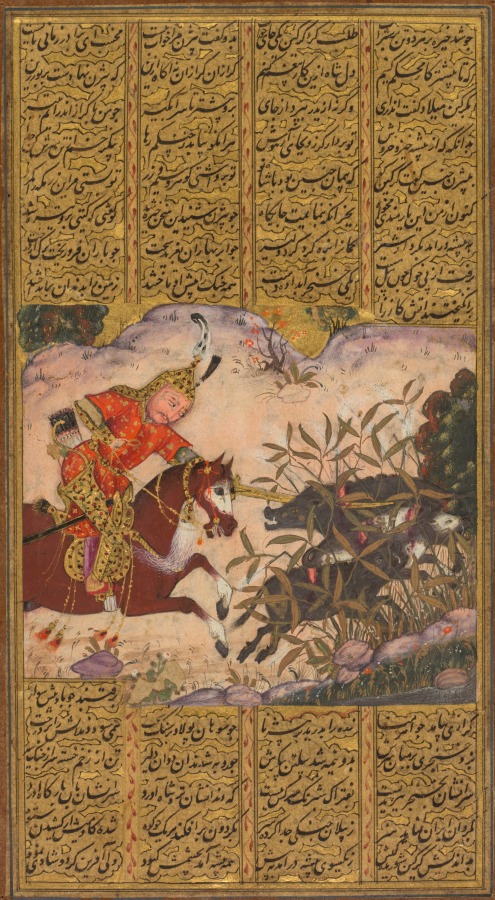 Bijan killing the wild boars of Irman, from a Shah-nama (Book of Kings) of Firdausi (Persian, about 934 to 1020) (verso)
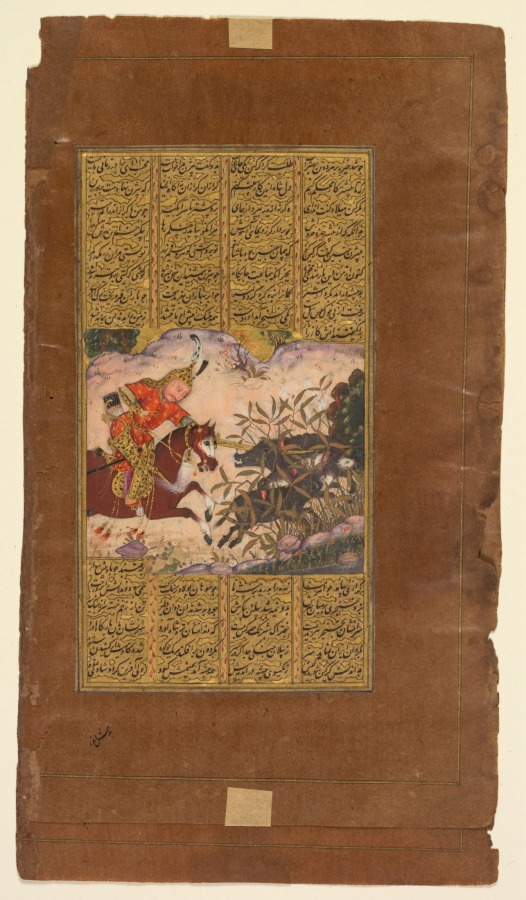 Bijan killing the wild boars of Irman, from a Shah-nama (Book of Kings) of Firdausi (Persian, about 934 to 1020), (recto)
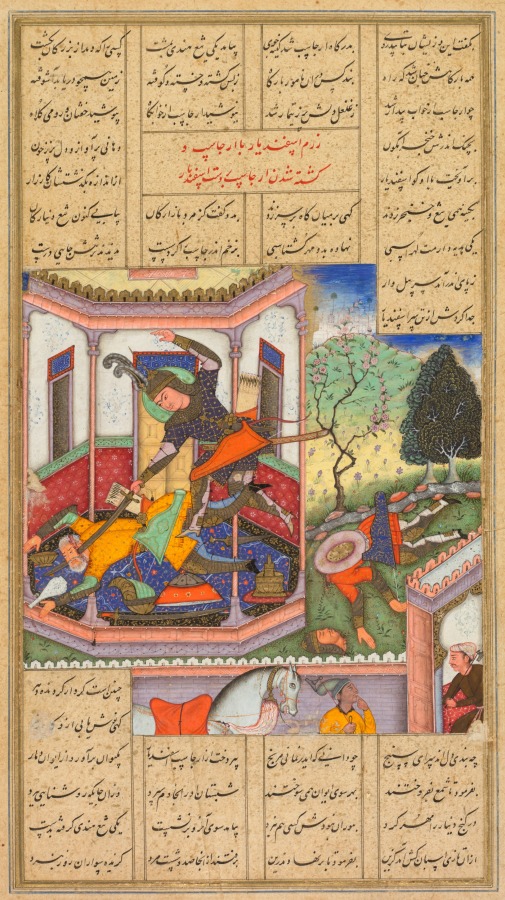
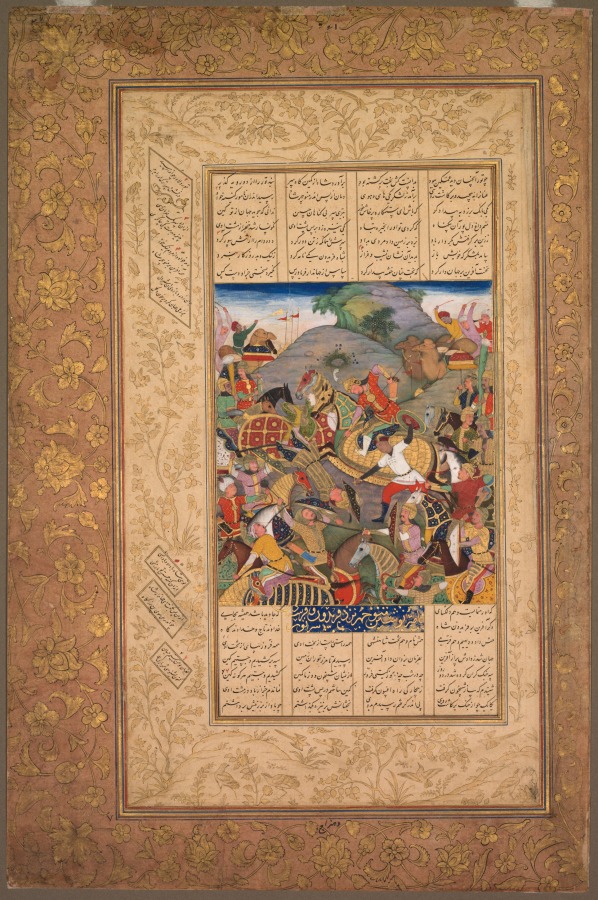
 Battle between Manuchihr and Tur, from a Shah-nama (Book of Kings) of Firdausi (Persian, c. 934 to 1020)
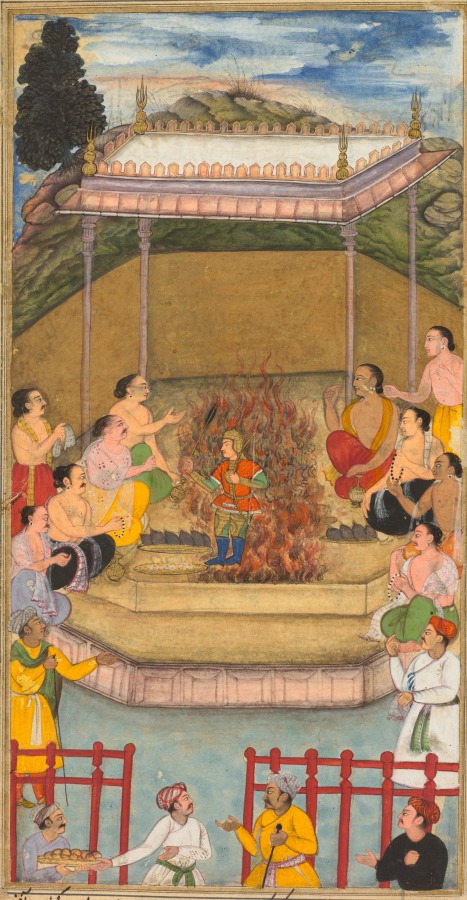
 Yaja and Upayaja perform a sacrifice for the emergence of Dhrishtadyumna from the fire, from Adi-parva (volume one) of the Razm-nama (Book of Wars) adapted and translated into Persian by Mir Ghiyath al-Din Ali Qazvini, known as Naqib Khan (Persian, d. 1614) from the Sanskrit Mahabharata
 Queen Kaikeyi reminds King Dasharatha about the sacrifices of King Bali and King Shivi, folio 39 from the Ayodhya Kanda (Book of Ayodhya) of a Ramayana (Rama's Journey)
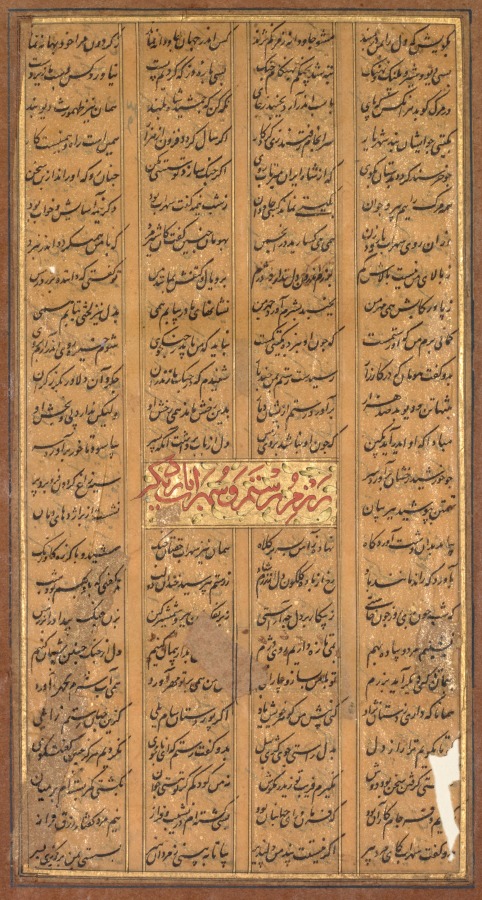
 Text of Rustam and Suhrab, from the Shah-nama of Firdausi (Persian, c. 934 to 1020) (verso)
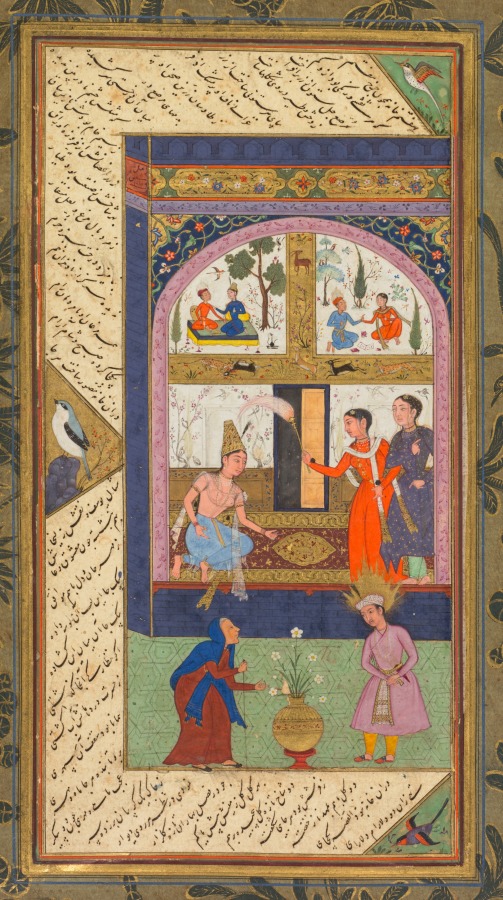
 Zulaykha in her palace and as an old woman with Joseph, from a Panj Ganj (Five Treasures) of Abd al-Rahman Jami (Persian, 1414 to 1492); verso from a Panj Ganj of Abd al-Rahman Jami (Persian, 1414 to 1492), with two masnavis: Yusuf va Zulaykha (Joseph and Zulaykha) and Khirad-nama-i Iskandari (Alexander’s Book of Wisdom)