← Art & CalligraphyRelated art & calligraphy
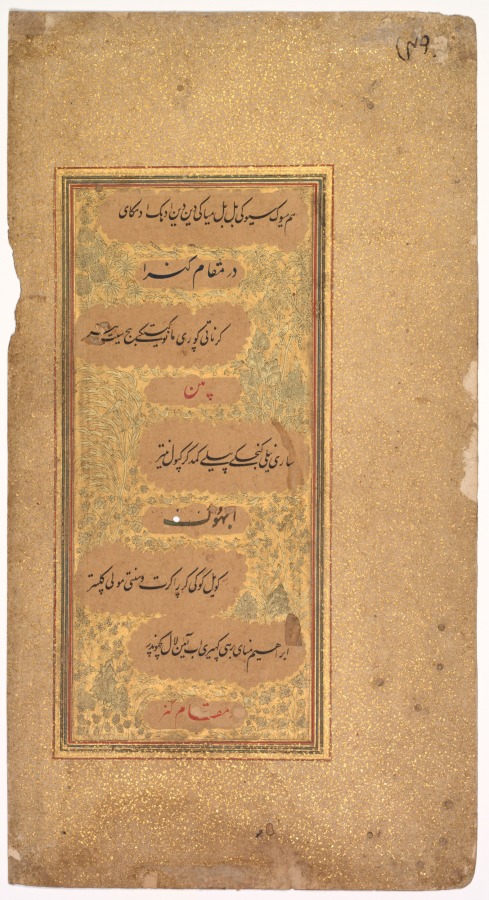
Dohras (Songs) from the Kitab-i Nauras of Sultan Ibrahim Adil Shah II of Bijapur (1570 to 1627); recto: From Dohras 36 and 40; verso: From Dohras 40 and 42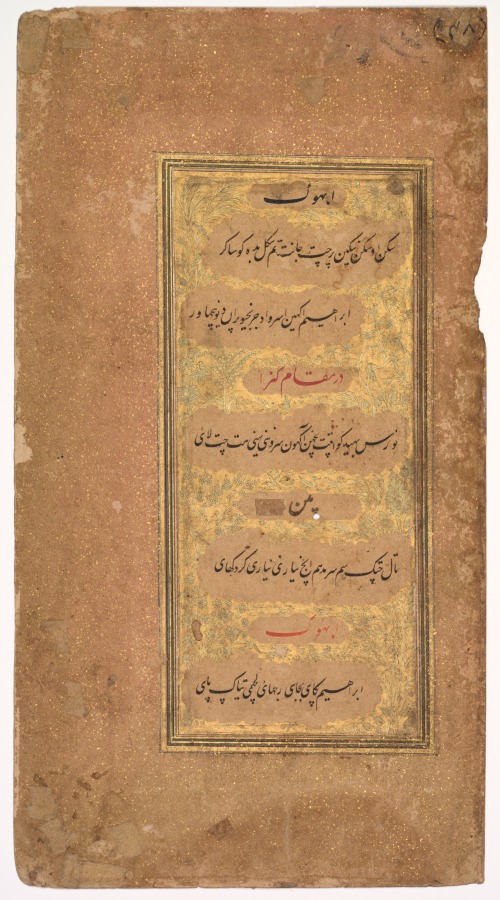 Dohra (Song) Five: Bhairava Raga, from a Kitab-i Nauras of Sultan Ibrahim Adil Shah of Bijapur (1570 to 1627)
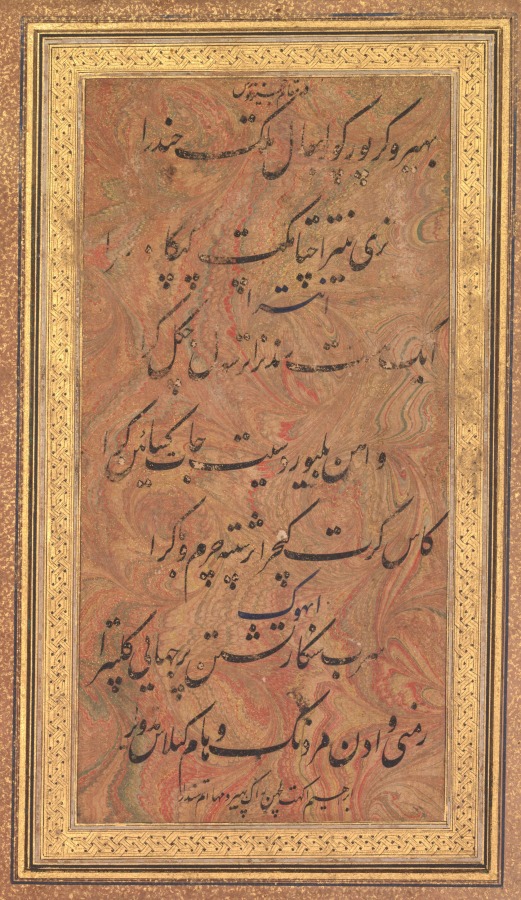 From Dohras (Songs) 36 and 40, from the Kitab-i Nauras of Sultan Ibrahim Adil Shah II (recto)
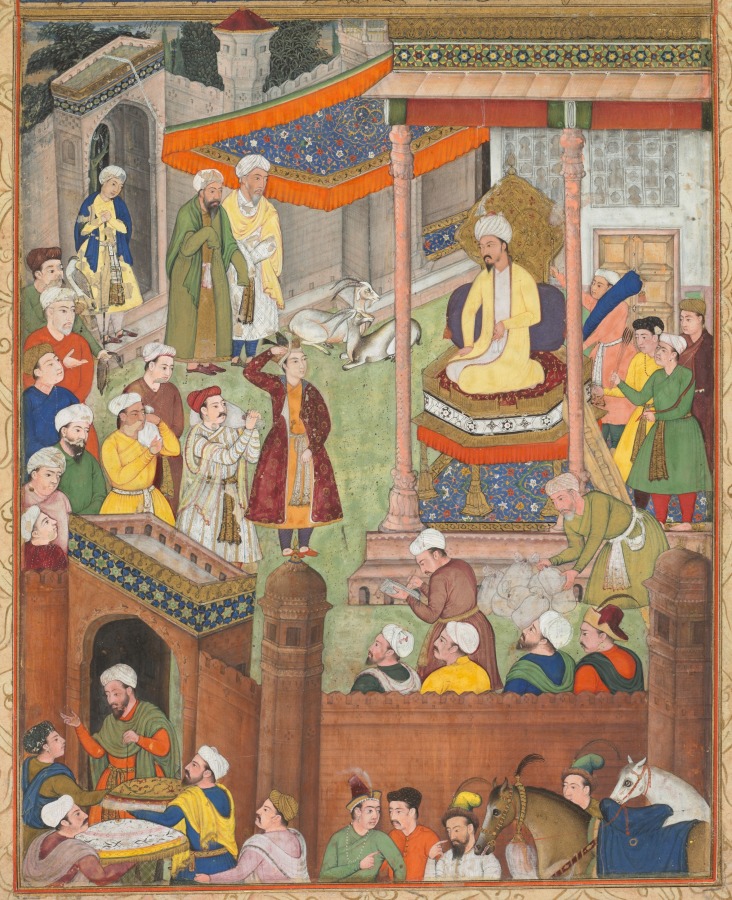
 Babur receives booty and Humayun’s salute after the victory over Sultan Ibrahim in 1526, from an Akbar-nama (Book of Akbar) of Abu’l Fazl (Indian, 1551 to 1602)
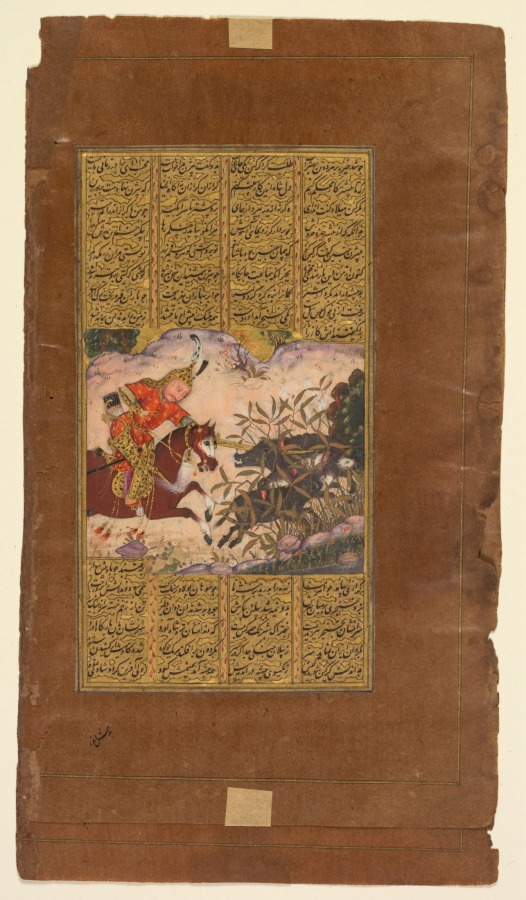
 Bijan killing the wild boars of Irman, from a Shah-nama (Book of Kings) of Firdausi (Persian, about 934 to 1020) (verso)
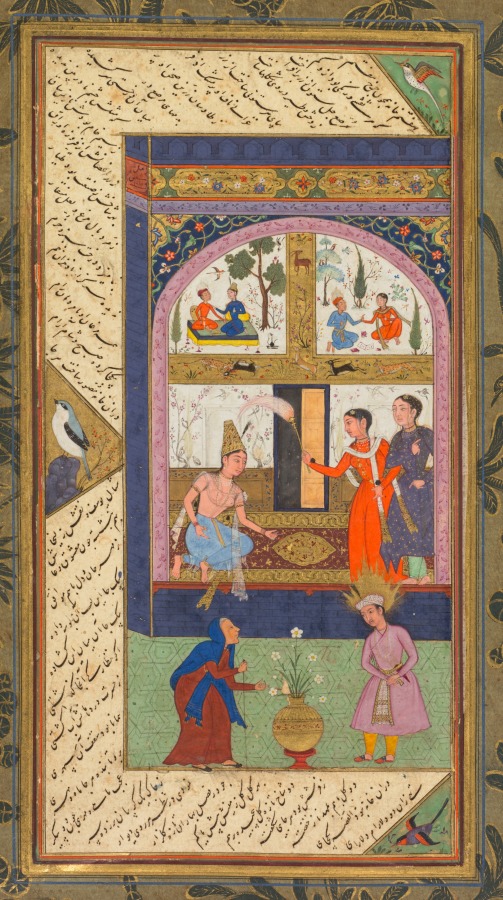
 Zulaykha in her palace and as an old woman with Joseph, from a Panj Ganj (Five Treasures) of Abd al-Rahman Jami (Persian, 1414 to 1492); verso from a Panj Ganj of Abd al-Rahman Jami (Persian, 1414 to 1492), with two masnavis: Yusuf va Zulaykha (Joseph and Zulaykha) and Khirad-nama-i Iskandari (Alexander’s Book of Wisdom)
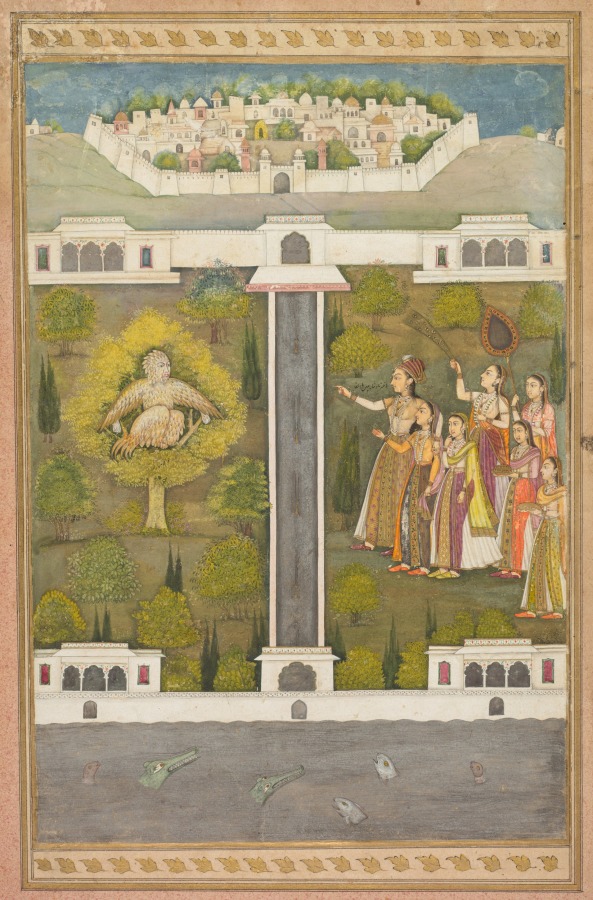
 Mahliqa, Daughter of the Emperor of China, Pointing at the Bird-Man Khwaja Mubarak: A Leaf from a Poetical Romance Relating to Shah Alam I (verso); Stenciled Scenes of Lion and Gazelle (verso)
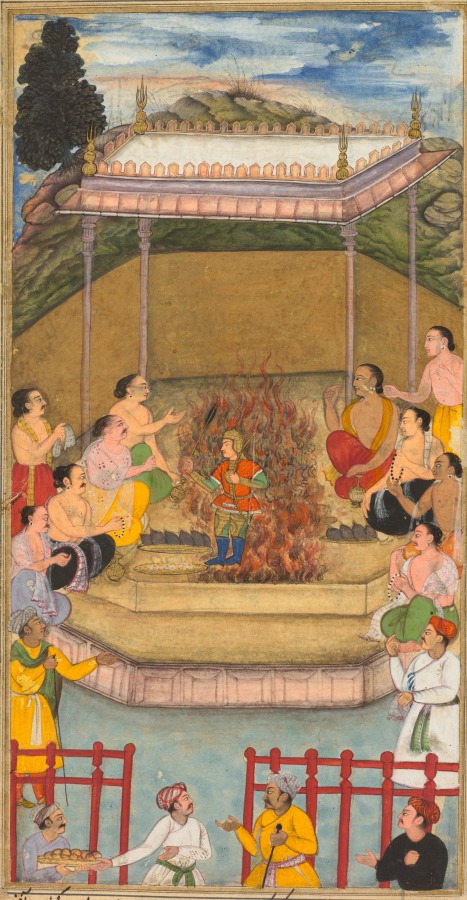
 Yaja and Upayaja perform a sacrifice for the emergence of Dhrishtadyumna from the fire, from Adi-parva (volume one) of the Razm-nama (Book of Wars) adapted and translated into Persian by Mir Ghiyath al-Din Ali Qazvini, known as Naqib Khan (Persian, d. 1614) from the Sanskrit Mahabharata