← Art & archivesRelated art & archives
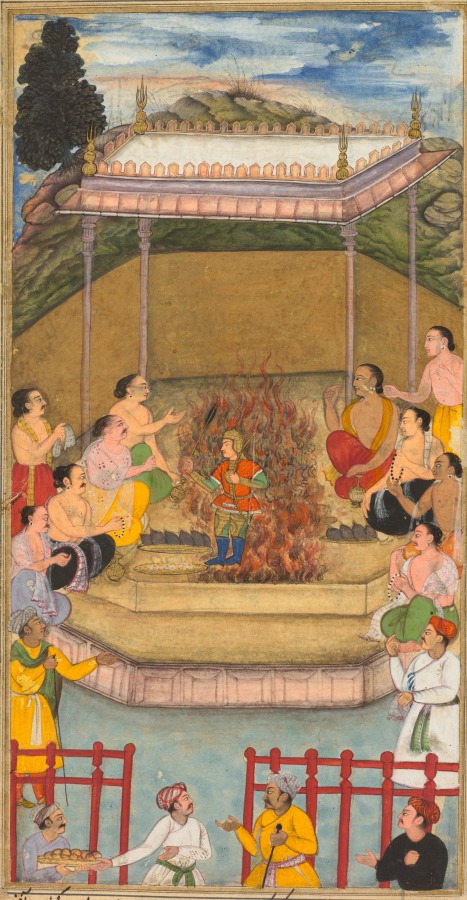
The king dreams of a lady, the personification of wealth, departing from him on account of his purchasing a bowl and a staff from a yogi, from a Tuti-nama (Tales of a Parrot): Thirty-sixth Night Yaja and Upayaja perform a sacrifice for the emergence of Dhrishtadyumna from the fire, from Adi-parva (volume one) of the Razm-nama (Book of Wars) adapted and translated into Persian by Mir Ghiyath al-Din Ali Qazvini, known as Naqib Khan (Persian, d. 1614) from the Sanskrit Mahabharata
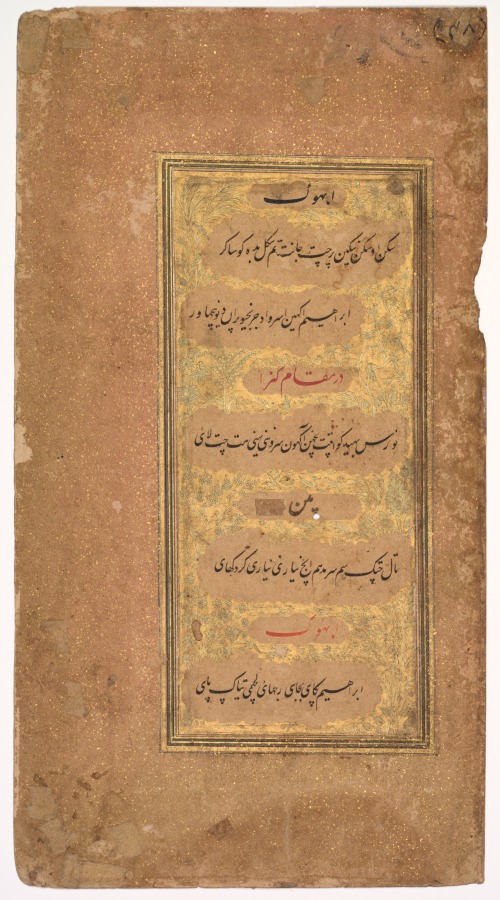
 Dohras (Songs) from the Kitab-i Nauras of Sultan Ibrahim Adil Shah II of Bijapur (1570–1627); recto: From Dohras 36 and 40; verso: From Dohras 40 and 42
 The origin of music from a fabulous bird of India which had seven holes in its beak, from a Tuti-nama (Tales of a Parrot): Fourteenth Night
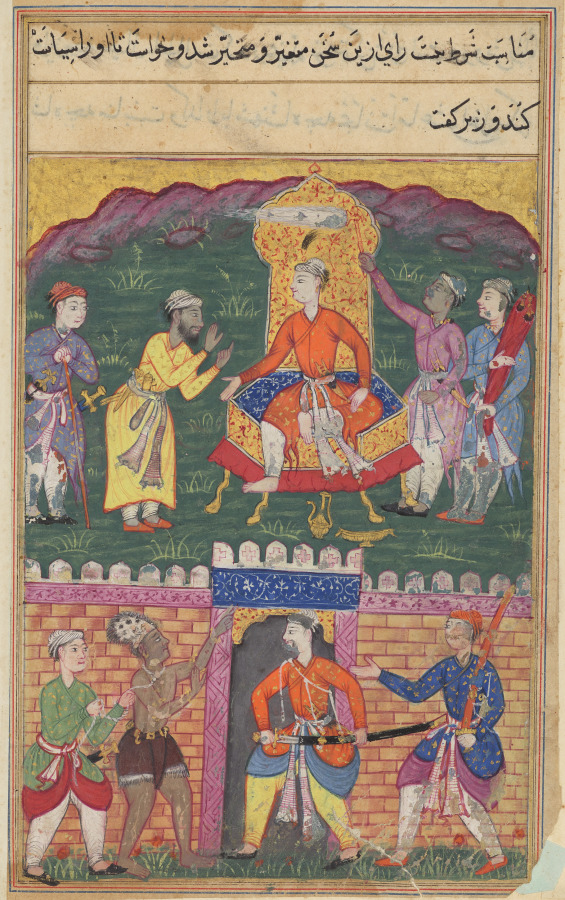
 The vizier dissuades the king of Bahilistan from executing the dervish who asks for his daughter’s hand in marriage, from a Tuti-nama (Tales of a Parrot): Seventh Night
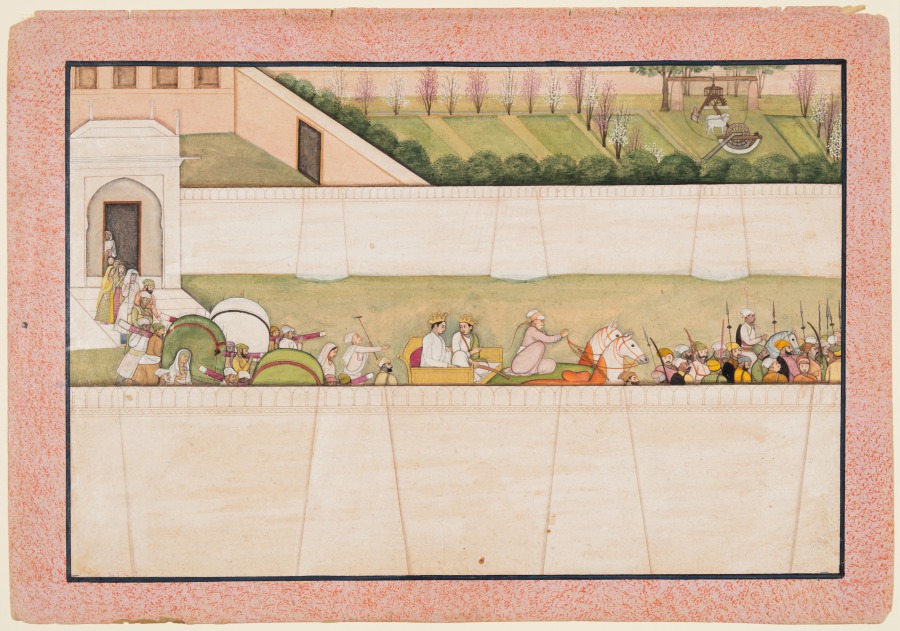
 Rama’s brothers Bharata and Shatrughna set out from Ayodhya to find Rama and Lakshmana in the forest to inform them of the death of their father Dasharatha, from Chapter 77 of the Ayodhya Kanda (Book of Ayodhya) of a Ramayana (Rama’s Journey)
 Timur distributes gifts from his grandson, the Prince of Multan, from a Zafar-nama (Book of Victories)
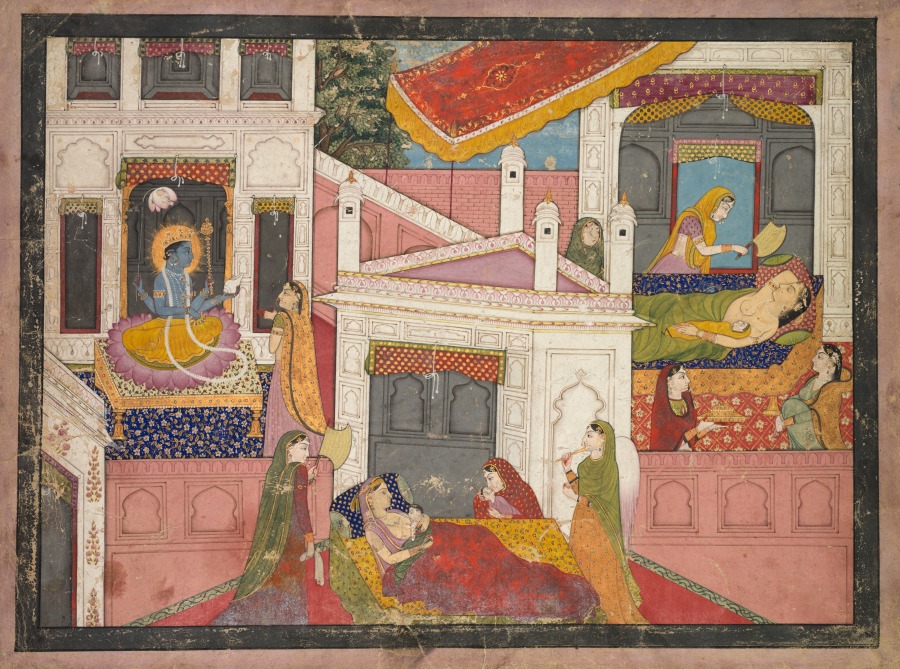
 The birth of Rama and his brothers, from Chapter 17 of the Bala Kanda (Book of Childhood) of the Adhyatma Ramayana (Rama's Journey of the Supreme Spirit) from the Brahmanda Purana (Ancient Scripture of the Cosmic Egg)