← Art & CalligraphyRelated art & calligraphy
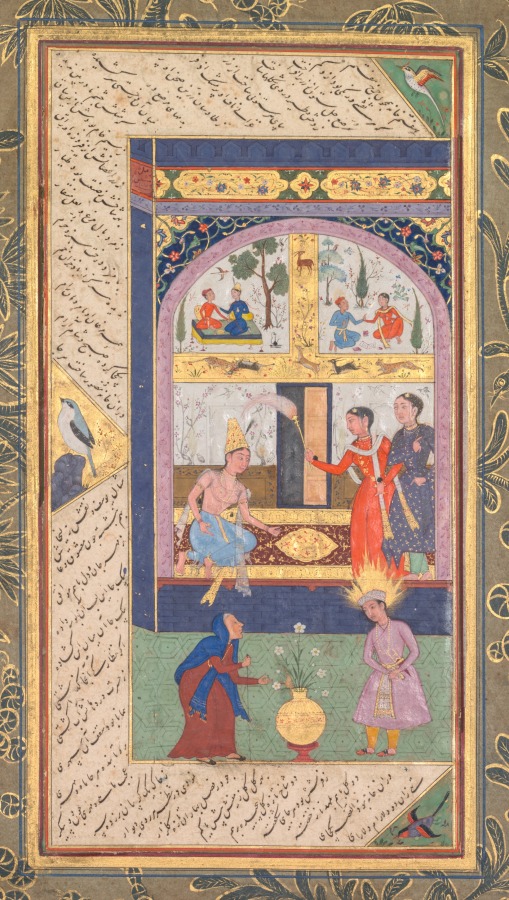
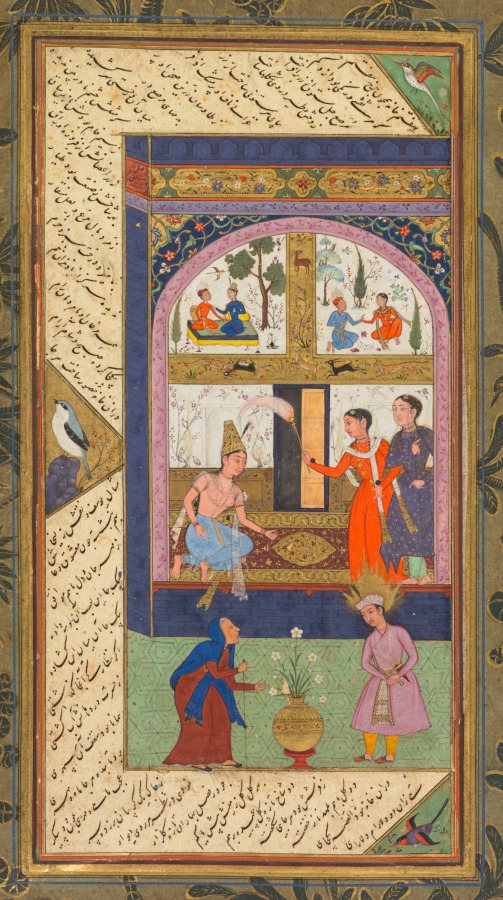
Zulaykha in her palace and as an old woman with Joseph, from a Panj Ganj (Five Treasures) of Abd al-Rahman Jami (Persian, 1414 to 1492); verso from a Panj Ganj of Abd al-Rahman Jami (Persian, 1414 to 1492), with two masnavis: Yusuf va Zulaykha (Joseph and Zulaykha) and Khirad-nama-i Iskandari (Alexander’s Book of Wisdom)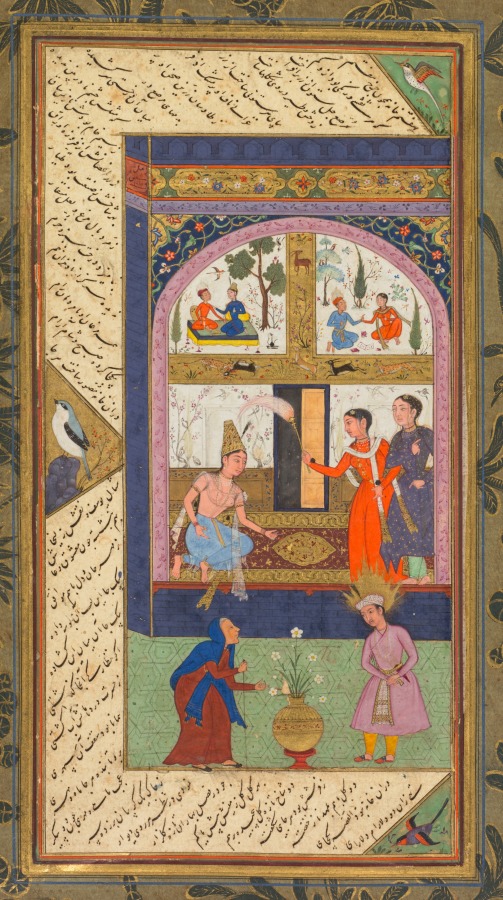 Illuminated page (verso), from a Panj Ganj (Five Treasures) of Abd al- Rahman Jami (Persian, 1414 to 1492) with two Persian masnavis: Yusuf va Zulaykha (Joseph and Zulaykha) and Khirad-nama-i Iskandari (Alexander’s Book of Wisdom)
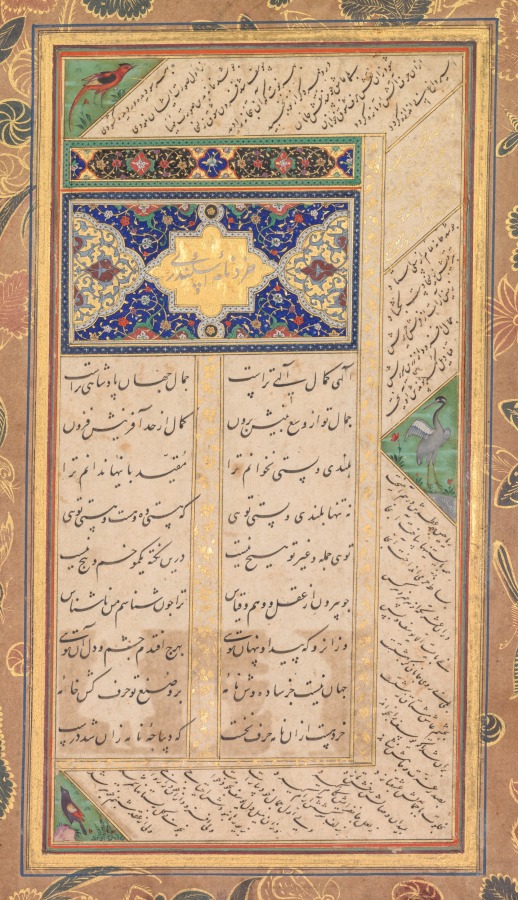 Page from the Panj Ganj (Five Treasures) of Abd al-Rahman Jami (Persian, 1414 to 1492), with two Persian masnavis (narrative poems): Yusuf va Zulaykha (Joseph and Zulaykha) and Subhat al-abrar (Rosary of the Righteous)
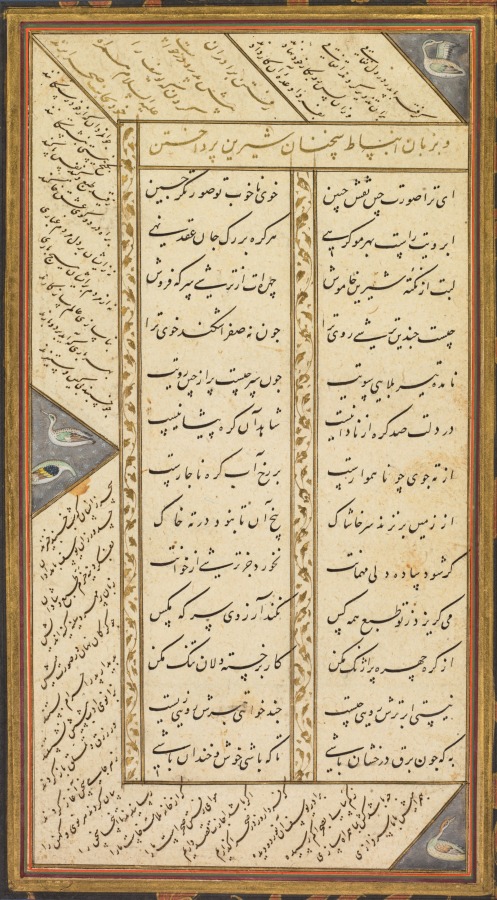 Page from a Panj Ganj (Five Treasures) of Abd al-Rahman Jami (Persian, 1414 to 1492), with two Persian
masnavis: Yusuf va Zulaykha (Joseph and Zulaykha) and Subhat al-abrar (Rosary of the Righteous) (verso)
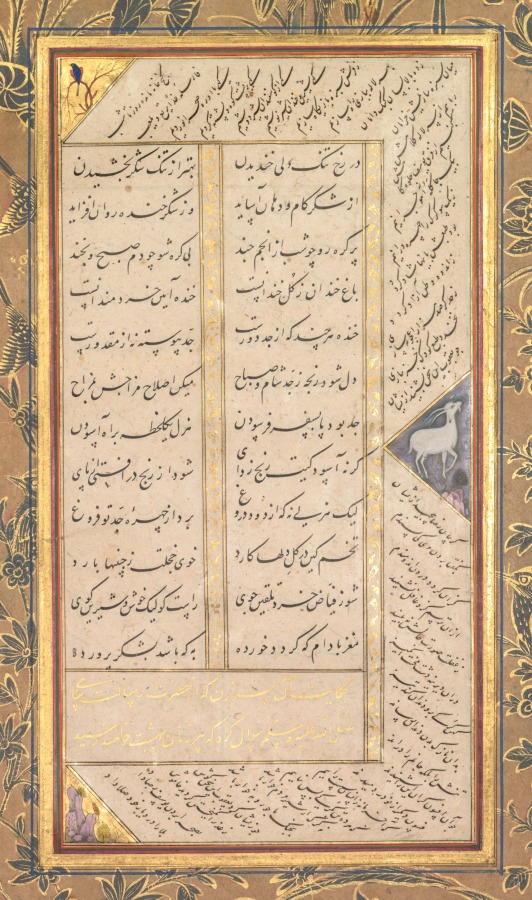 Folio B: Folio from the "Five Treasures" (Panj Ganj) of Jami (recto)
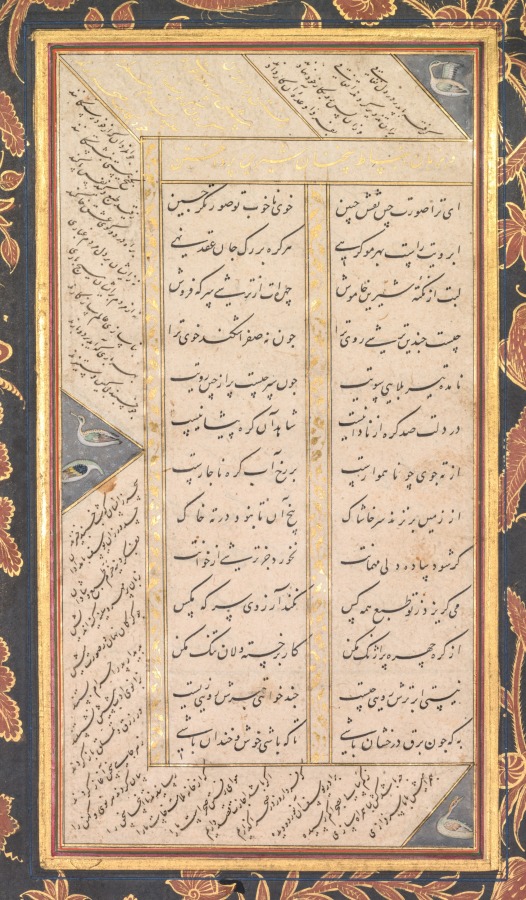 Folios A and B from the "Five Treasures" (Panj Ganj) of Jami
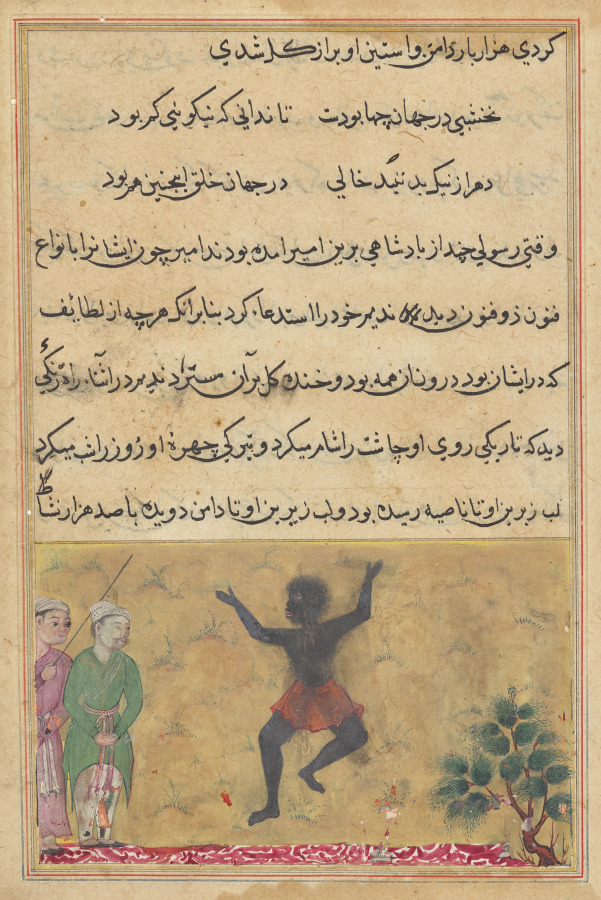
 The court jester meets a Zangi dancing with joy, and learns from him that the cause of his happiness is his assignation with a woman who is the jester’s own wife, from a Tuti-nama (Tales of a Parrot): Twenty-second Night
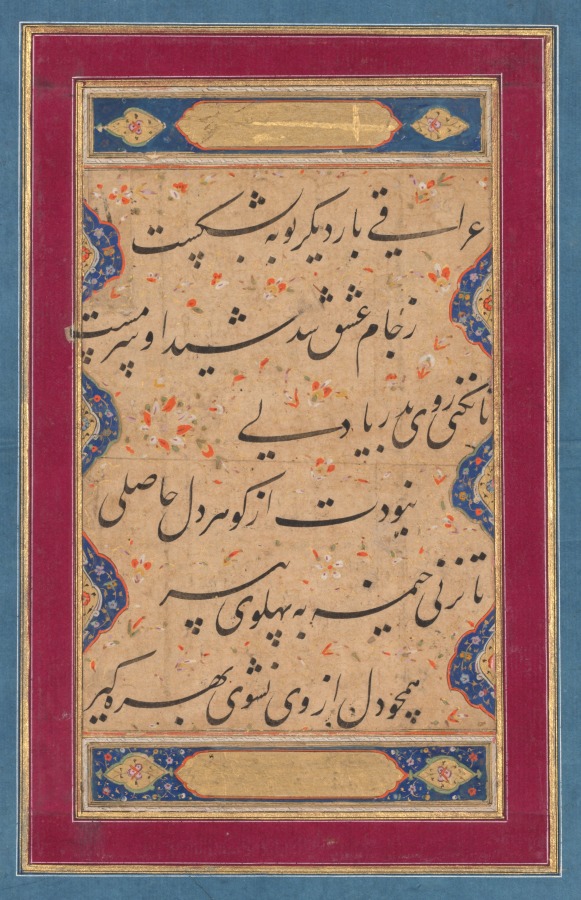
 Calligraphy from a ghazal of Fakhr al-Din Iraqi (Persian, 1213 to 1289) and a verse from the Tuhfat al-ahrar (The Gift of the Free) of Abd al-Rahman Jami (verso)