← Visual Archive
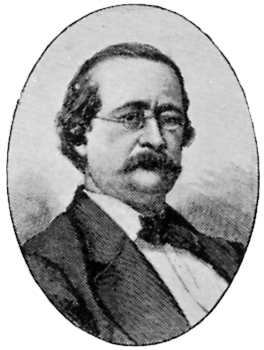
The image shows a black and white photo of a man with a mustache wearing a blazer and spectacles.

More to explore

The image shows a painting of a man and two cows in a field surrounded by trees, houses, hills, and a sky with clouds.
The image shows a page from a book with a drawing of a musical notation on it. The paper is filled with text and musical symbols, including a treble clef and a bass clef. The text is written in black ink on a white background, and the musical symbols are arranged in a pattern around the page.
The image shows a train station with people walking through it. On the right side of the image, there is a train on the track, and on the left side there are boards with text and images. At the top of the roof, there are lights illuminating the station, and in the background there are glass doors. The station is located in Xiangjiang, China, and is known for its high-speed train services.
The image shows a black and white drawing of a variety of surgical instruments, including a scalpel, on a white background. The text accompanying the drawing provides further details about the instruments.
The image shows a man with a hat and a cane, drawn on a paper with something written on it. His face is clearly visible, with a thoughtful expression and his eyes looking off into the distance. He is wearing a long coat and a hat, and his cane is held in his right hand. His hair is short and dark, and he has a stubble on his chin.
The image shows a black and white photo of a woman in a white dress. Her face is clearly visible, with her eyes looking directly at the viewer and her lips slightly parted. Her hair is pulled back and she has a gentle expression on her face.
The image shows a painting of a man in armor, wearing a red and black dress, against a black background. He is believed to be King Henry VIII of England.
The image shows three Native American Indians with bows and arrows in their hands, standing in front of a backdrop of trees and a sky. The painting is titled "The Three Musketeers" and was created in 1864.
Explore collections